Cookie Warning


A Warning from Poirot:

Mon Ami, allow me to warn you of a possible danger of reading this blog. Although I'm not a programmer, I understand that cookies may be used on this blog. So if your computer, tablet, phone (etc.) finds cookies objectionable, please peruse these posts with a cookie-friendly internet-surfing device.

Monday, May 27, 2019

Hercule Poirot and the Salvation Army Part 2


Although Agatha Christie wrote "The Adventure of the Clapham Cook" in the 1920s, the Agatha Christie's Poirot TV series set their adaptation in the 1930s. Fans of the Downton Abbey series will remember this was a time of great societal change. The gentry could no longer employ large household staffs, and the common people were working in shops, factories, and offices instead.

With more free time, money, and independence, the way people socialized evolved. Young people frequented nightclubs, wore makeup, danced and drank, and explored sex outside of marriage. Agatha Christie charts this changing landscape in her Tommy and Tuppence mysteries. Her two young detectives, far more representative of this modern age in England than Hercule Poirot, stay up all night, and party hard.


Annie of Albert Mews, by English author Dee Williams, also shows this change occurring. At times the novel seems a little simplistic and preachy, as Annie's friend takes up the wild, loose living of the age. Her friend convinces her to try out this modern lifestyle, but Annie cannot help seeing it as decadent. Ultimately, Annie's friend completely loses her identity, and then her life, amid her soaring life of nonstop thrills. 

Saddened, seeking direction, Annie looks for greater meaning in her life, For a time, she finds it by becoming a volunteer for the Salvation Army.

Thankfully, we have Hercule Poirot to rely on. Although some recent adaptations suggest differently, Agatha Christie's famous detective didn't need the instruction and guidance of religious authorities to navigate this new, modern age. He'd seen the horrors of the Third Battle of Ypres. He'd survived the devastation of his country. He was an old fashioned figure, exemplifying the values of a previous age. He practiced temperance and moderation. He dressed smart, and was kind and considerate. He served as a beacon of gentility to a generation in flux.


Sadly, in "The Adventure of the Clapham Cook," even Inspector Japp can't see that. He'd come to recognize Poirot's wisdom as time goes on. But in this first episode--like everyone else--he's all too ready to dismiss him as a funny little Frenchy.

Dragon Dave

Monday, May 6, 2019

Hercule Poirot and the Salvation Army Part 1


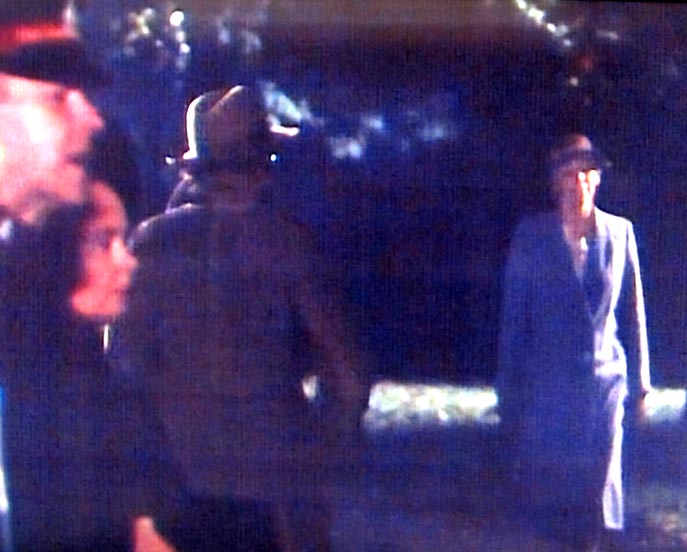
In the Agatha Christie's Poirot adaptation of "The Adventure of the Clapham Cook," Eliza Dunn is walking home after her afternoon off. As a volunteer for the Salvation Army preaches to a few people on the street about the "stone that the builders rejected," a distinguished-looking man leaves the crowd to approach her. He tells her that he is a lawyer from Australia, who has traveled to England to find her.

As the man from the Salvation Army explains to the crowd that this stone, which the builders initially rejected, has become the cornerstone (or the most important stone in the building's foundation), the distinguished lawyer hands her an envelope containing the will of one of her relatives. In it, she will receive a legacy that will enable her to leave her employment as a cook, and own her own house in the country.


The gentleman from the Salvation Army is referring to Psalm 118: 22. The imagery refers to workers in a quarry, who look for the chief stone to use in a building's foundation. The gospels Matthew, Mark, and Luke record Jesus quoting this verse, and identifying himself as the cornerstone that the Jewish leadership rejected. In Acts, Peter uses this verse to stress that Jesus is the cornerstone of the true faith, and salvation can only come through him.

This is just a little background in the scene. Most viewers would filter out the preacher's message, as Eliza Dunn relates this bit of backstory to Hercule Poirot. But it's a neat inclusion from screenwriter Clive Exton. Not only was the Salvation Army an important movement in 1930s Britain, but Eliza Dunn, who has worked all her life below-stairs for the gentry, and never been a person of importance, has suddenly become a woman of independent means.

Suddenly, she's somebody. She's more than just a poor employee who works nearly seven days a week. She can order her life, and make her own choices. She may not be a cornerstone of British society, but she's just become far more important than she has been up to now.

Or at least, so it would appear.

Dragon Dave

Monday, April 8, 2019

Women of Clapham and London


In "The Adventure of the Clapham Cook," the first episode of the TV series Agatha Christie's Poirot, writer Clive Exton portrays women in a curious manner. Take for example, Mrs. Todd. She travels all the way from Clapham to visit his flat in London, then insults Poirot by suggesting that he may not be as intelligent as the papers claim.

It's only after the words have left her mouth that Mrs. Todd realizes he might possibly take offense at her suggestion. And this, from a woman who dresses well, the wife of a respected banker, and seemingly a woman accustomed to moving in society circles.

Nevertheless, Hercule Poirot is gracious. When Mrs. Todd insists so strenuously that a good cook is essential to her quality of life, Poirot agrees to investigate the disappearance of her cook, Eliza Dunn. After all, it means so much to her!


Or consider Annie, Mrs. Todd's parlormaid. She fervently believes that Eliza Dunn was kidnapped by white slavers. Annie has no evidence to back this up, but since Eliza Dunn was afraid of them, the parlormaid believes the white slavers must have taken Ms. Dunn away to a foreign country. Even when Poirot points out that Eliza Dunn later sent a letter, requesting her personal effects be sent to her new address, the parlormaid doesn't change her mind. "Well, wherever she is, she'd want her things," Annie insists.

While Poirot is questioning Annie, Mrs. Todd listens at the door. Afterward, she wants to know what Annie said about her. She believes that servants always badmouth their employers, and fears that Annie may have said something untrue or derogatory about her.

After Mr. Todd comes home, he talks his wife out of finding the missing cook. So after that, Mrs. Todd won't give Poirot the time of day. She seems insensible to the reality that Poirot's kindness in agreeing to investigate her missing cook has lessened Poirot's stature with the police. She's angry with him at the slightest inconvenience his investigation causes her. And this, from a woman who insisted that the missing cook was essential to her quality of life!


Or consider Eliza Dunn. On her day off work, she meets a stranger on the street. She accompanies him to a cafe, where he tells her that he's an attorney, and she's entitled to receive an inheritance. But under the terms of the will (of a supposed ancestor Miss Dunn has never heard of), she can't be employed anywhere, and must take possession of a cottage in Keswick immediately. So Eliza Dunn writes a letter of resignation to her employer, and the stranger puts her on a train that evening. Thus, she embarks on a three hundred mile journey to a place she's never been before, without checking out the facts of this man's story in any way.


Compared with these women, Poirot's secretary, Miss Lemon, seems to have a good head on her shoulders. She keeps his files in order, knows how to get the best out of the necessary tradespeople and suppliers, and manages his bank account better than Poirot himself. Yet, Miss Lemon, this model of efficiency, is never seen as a fully rounded person. While supremely competent in business matters, she has no social life. As best I can remember, over the course of the series, a man only courts her once. Sadly, the man turns out to be a criminal who is using her. 

In "The Adventure of the Clapham Cook," Hercule Poirot tries to search for Eliza Dunn using a direct approach. He dictates an advertisement which Ms. Dunn will be inclined to answer, and entrusts Miss Lemon to place it in all the relevant newspapers. Then he tells his efficient, capable secretary, "Run along," as an adult would speak to a child.

While Clive Exton's portrayal of women in this episode may seem extreme, it's reminiscent of statements Agatha Christie made about the role of women in her autobiography. In her era, women only worked until they married. After marriage, a woman in society largely relied on her servants to run the household and raise her children. With nothing to do, she became reliant on others, and fearful of anything that might rock her world.

Perhaps this explains the determination that drove Agatha Christie to make a career as a working author. Perhaps it explains her strange disappearance after her first husband's affair, and his intent to end their marriage. Perhaps it explains why her books quickly became popular, and have never gone out of fashion.

Or perhaps I'm making too much of little details "The Adventure of the Clapham Cook." It was the first story the production team adapted, after all. And as we all know, there's far more to Agatha Christie, and Hercule Poirot, than just one story.

Dragon Dave

Monday, March 25, 2019

Poirot Puts His Foot In It


In "The Adventure of the Clapham Cook," the first episode of the TV series Agatha Christie's Poirot, the great detective and Captain Hastings journey to the Lake District in England. From the train station in Keswick, they walk to the remote cottage of Eliza Dunn, the former cook of Mrs. Todd. In so doing, they pass through picturesque grazing land. 

Hastings may view this herd of sheep as charming, but Poirot would rather not pass through them.


Inevitably, Poirot's beautiful shoes get mired in mud, as well as what the animals left behind. Despite the pride he takes in his appearance, Hercule Poirot carries on, and continues his walk to Eliza Dunn's home.


Some may see Hercule Poirot's choice of spats at fussy or pretentious. Certainly spats look nice, and they were fashionable English attire in the 19th and early 20th centuries. According to Wikipedia, they fell out of favor in England in the 1920s. Although "The Adventure of the Clapham Cook" was written in the early 1920s, the TV series largely set their stories in the 1930s. So depending on how you see Hercule Poirot's choice of footwear, spats are either fashionable, or they're not.

One thing you can't argue with is that they are practical. At least, in the sense that they protect Poirot's socks from mud (and worse). This would not only come in handy on the dirty London streets, but also on muddy grazing land in the Lake District. 

Perhaps spats also represent a fashion statement. In an interview, actor David Suchet claimed that spats were a key to finding the character of Hercule Poirot. Certainly, if new types of footwear were coming into fashion, Hercule Poirot would look more distinctive if he clung to the fashions of an earlier age. And as older people often feel as though people of the next generation are less moral and proper than themselves, spats could also signal that Poirot will not accept any lessening of his standards of ethics and propriety.


In his commentary for "Murder on the Orient Express," actor and director Kenneth Brannaugh stated that he wanted his Poirot to be less fastidious, or prissy, in his attire. Thus spats were replaced with more era-appropriate footwear. Yet it's interesting to note that in the opening minutes of the movie, and Brannaugh's first appearance as Hercule Poirot, the great detective walks down a street in Jersalem and steps in something an animal has left behind. Is this a mere coincidence, or an intentional homage? In either case, it signals that Hercule Poirot will tread through the filth of this world, in order to seek out the truth.

Dragon Dave

Monday, March 11, 2019

The Indefatigable Hercule Poirot


In the Agatha Christie's Poirot episode "The Adventure of the Clapham Cook," Hercule Poirot and his friend Captain Hastings journey by train to Keswick, a town in the Lake District of England.  From the train station in Keswick, they trek across the land, and up and down the gently rolling fells (or hills), until they reach the remote cottage where Eliza Dunn now lives. 

Many see Poirot as someone who would prefer to sit in his apartment all day, and relax rather than take exercise. But Hercule Poirot's not afraid of walking several miles up and down hills and through fields to uncover the mystery surrounding the missing cook. It's also noteworthy to point out that he travels from London to Keswick, and by the time he talks with Miss Dunn, and returns to the station, night has fallen. So he journeys back to London well into the night.

My wife and I visited the Lake District on our visit to England in 2012. We stayed just south of the Lake District, outside the city of Landcaster. Our drive to Ambleside, a village in the south of the Lake District, took us an hour or more.


There we enjoyed beautiful Rothay Park, saw a museum, the local church, and visited the home of writer Beatrix Potter, where all our questions about Peter Rabbit were answered. 


Had we driven up to Keswick, it would have taken us an additional forty-five minutes each way. As you can imagine, four hours of driving would have limited what we could see and do on our day in the Lake District. 

Without a hundred-year-old copy of an ABC Railway Guide, I can only imagine how long it would have taken Poirot and Hastings to travel roundtrip from London to Keswick via an old steam-driven train, and then walk to and from Eliza Dunn's remote cottage. And all to unravel the mystery of a disappearing cook.


 But then, it's all in a day's work to the indefatigable Hercule Poirot.

Dragon Dave

Monday, February 25, 2019

Hercule Poirot at Albert Bridge


In the Agatha Christie's Poirot episode "The Adventure of the Clapham Cook," Hercule Poirot agrees to investigate the disappearance of Mrs. Todd's cook. He and Captain Hastings accompany her to her house in Clapham, a district of London south of the River Thames, via Albert Bridge.


After questioning Annie, Mrs. Todd's maid, Poirot must wait for Mr. and Mrs. Todd's lodger to come home. He and Hastings "take a turn" on Clapham Common, a nearby public park, while they wait for Mr. Simpson to finish his shift at the bank. This is a large park, taking up over two hundred acres in densely populated London. This gives the men plenty of area in which to stretch their legs, and chat about what they've learned. 

After their turn on the common, they walk back to Mrs. Todd's house, where Poirot questions the bank clerk for clues to the missing cook's whereabouts. Then they leave the Todd's house to return to Poirot's flat.


You'd think, after his walk to, around, and back from Clapham Common, Poirot would call a cab and return to his comfortable flat. But either the cabs aren't running this late, or the men opt for even more exercise. At least, they walk as far as Albert Bridge, roughly 1.7 miles from Clapham Common. This gives Poirot time to ponder what he has learned, and review the essential points of the case with his friend Hastings.


There's a long tradition in stories of characters thinking through the issues that perplex them while walking. Albert Bridge is certainly a beautiful place to walk to. It's a pink and white suspension bridge, with lots of great architectural features. 


You'll pass over it in an instant traveling by car. But when you walk across it, like Poirot and Hastings do, you'll see so much more of the artistry that went into its design.


It also affords great views of the River Thames, as well as the adjacent Battersea Park.


Given their training and experiences during World War I, Poirot and Captain Hastings would remember not to walk in step with each other. Despite their apparent need to exercise, they wouldn't want to break the beautiful Albert Bridge, and find themselves swimming in the River Thames. At least, not at night, and in their best clothes.


Then again, given Poirot's love of walking, maybe I'm wrong.

Dragon Dave

Monday, February 4, 2019

The Importance of a Good Cook


In the Agatha Christie's Poirot episode "The Adventure of the Clapham Cook," Mrs. Todd comes to see the great detective in his office. When Poirot shows no interest in investigating the disappearance of her missing cook, she stands up and insists that a good cook is hard to find, and hugely important to her life and happiness. Her appeal knocks Poirot out of the doldrums, and he agrees to take the case.

Once or twice during our marriage, my wife and I have been forced to live without a microwave oven. While it takes little effort to warm up leftovers in a microwave, it takes far longer to do so in a traditional oven. And if you want to cook it over the stove, that takes even more care and effort. Often, it's easier to just cook up something new, rather than reheat something that's also been prepared.

Needless to say, each time our microwave oven broke, we replaced it fairly quickly. 

A century ago, the refrigerator was a relatively modern invention. More than likely they were expensive, and few people owned one. People like Mrs. Todd might have had a wood or metal icebox, but whether (and how much) they could use it to keep food cool would depend on the cost and availability of ice. Other devices we take for granted, such as electric can openers and toasters, would likely have been just as scarce. This, along with a much more limited supply of food, due to less developed preservation techniques, and longer transportation times for food, meant that people had to devote more thought, effort, and time to food preparation than they do today. Hence, Mrs. Todd's insistence that she needs a good cook.

In E. F. Benson's Mapp and Lucia series, whenever Elizabeth Mapp or Emmeline Lucas wanted to get together with her friends, she called them over for tea, or an afternoon party, or dinner. Either way, there was a menu to plan, and food to buy and prepare. It's not until the sixth and final novel, Trouble For Lucia, published in 1939, that the ladies begin to entertain their friends regularly at a neighborhood tearoom. They do this because it becomes economically feasible, and the setting is conducive to their get-togethers. 

Obviously, there were restaurants where people could go out to eat in the 1920s, when Agatha Christie wrote "The Adventure of the Clapham Cook." In Agatha Christie's Poirot, we see Hercule Poirot and Hastings dine out in restaurants. (In the 1983 TV series Agatha Christie's Partners in Crime, we see Tommy and Tuppence dine out at teashops, small restaurants, expensive restaurants, and hotel restaurants). But there seems to be a societal change in the late 1930s, that E. F. Benson wanted to comment on, about the idea of a proper lady in society feeling like its okay to regularly entertain her friends in a tearoom or restaurant, whereas before the primary setting for such get-togethers was the home. Then again, the Mapp and Lucia novels depict everyday life in Tilling*, whereas "The Adventure of the Clapham Cook" takes place in metropolitan London. Obviously, Mrs. Todd would have more options for entertaining than Elizabeth Mapp and Emmeline Lucas did in a remote fishing village.

So while we don't know how often Mrs. Todd entertained, she would have likely eaten breakfast and dinner with her husband most days. Lunch probably depended on her plans. Then there's her parlormaid Annie, who would have eaten three meals per day. Poirot and Hastings question her, to learn about the missing cook's daily routine.


In addition, Mrs. Todd rents out a bedroom. Assuming she fed her lodger one to two meals each day, we can see the cooking duties of Mrs. Todd's household beginning to take shape. And remember, all this food preparation and cooking requires washing the dishes and cleaning the kitchen. This would have been a laborious process, in an age without nonstick pans, and the glory of the modern age, the electric dishwasher.

Mrs. Todd obviously didn't want to spend all day planning, preparing, and cooking food. Thus her insistence that a good cook is hard to find, and important to her quality of life. Given how particular Hercule Poirot was about the food he ate, his agreement to investigate the case of her missing cook grows a little more understandable. The only thing that seems a little odd is that, in the early seasons of Agatha Christie's Poirot, Hercule Poirot doesn't seem to employ a cook, or any other household servants. In fact, when we see him eating at home, or entertaining guests, he is doing all the cooking and cleaning up! And no one could accuse Hercule Poirot of leading anything other than a rich and full life--one that makes him fulfilled and happy.

Take that, Mrs. Todd!

Dragon Dave

* In the Mapp and Lucia books, Tilling is a fictionalized version of Rye, located in the British county of Kent, in southern England. E. F. Benson lived there in Lamb House, which he rented from fellow writer Henry James.